顯示具有 Travis Hoium 標籤的文章。 顯示所有文章

2020年9月28日 星期一

Why Shares of Enphase Energy, Bloom Energy, and SolarEdge All Jumped on Monday

 https://www.fool.com/investing/2020/09/28/why-shares-of-enphase-energy-bloom-energy-and-sola/

Shares of renewable-energy stocks had a great start to the week, with a few popping double digits in trading on Monday. Enphase Energy (NASDAQ:ENPH) was up as much as 8.3%, Bloom Energy (NYSE:BE) rose up to 11.1%, and SolarEdge (NASDAQ:SEDG) increased 8.7% late in the day. Shares of the three stocks were up 6.1%, 11.4%, and 8.6% respectively at the market's close. 

To put these moves into perspective, the S&P 500 and Dow Jones Industrial Average were up 1.6% and 1.5% respectively and the Nasdaq was up 1.9% today. The fact that oil is up 0.8% is a bit of a boost for renewable energy stocks as well. 

So what


The big news today is that Congress and the White House are set to resume stimulus talks once again. The talks collapsed when the Senate and White House balked at a $3 trillion-plus stimulus package from the House of Representatives and early indications are that the current round of negotiations will be near that number. Reporting from multiple news outlets puts the package House Democrats will advance at about $2.4 trillion. If there's anywhere near that amount of money going into the system it'll be a boost for markets.
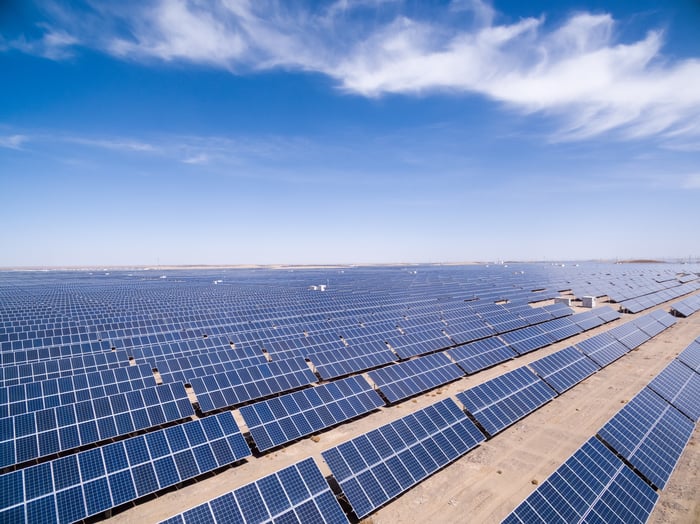
 

Solar farm in the desert on a sunny day.

IMAGE SOURCE: GETTY IMAGES.

Renewable-energy stocks not only usually exaggerate the market's moves because they're more volatile in general, accounting for some of the move today, they have a lot to gain from a stimulus package led by the House of Representatives. We don't know the details of the negotiations yet, but House Democrats are friendly to renewable energy, so funds to boost investment in the industry could be included as part of the deal. 

Two incentives to keep an eye on will be an increase in the investment tax credit for residential solar, which would boost demand for Enphase and SolarEdge. For Bloom Energy, the alternative-fuels market is just starting to gain traction, but if Congress pushes any incentive it could help the hydrogen and fuel cell business. 

Now what

The months-long recovery for renewable energy stocks continues today and a stimulus could be another positive for the industry. Investors were a bit surprised that revenue and earnings for renewable energy companies haven't been too negatively impacted because of COVID-19. In fact, a lot of manufacturers are reporting strong results and even year-over-year revenue growth. 

While the market can move wildly on days like today, investors shouldn't read into the moves too much. While a stimulus could be good for markets in the short term, it's not likely to impact the long-term viability of renewable energy. Instead, investors should watch the revenue growth and margins for renewable-energy companies. On that front, 2020 has been a better year than expected, and when the economy returns to a more normal pace there could be years of growth ahead. 

***********************************************************


2020年6月5日 星期五

Where Will SolarEdge Technologies Be in 5 Years?

 Travis Hoium

(TMFFlushDraw)

There's one area where SolarEdge could expand its business, but it may be easier said than done.  

Jun 5, 2020 at 11:36AM 


One of the more remarkable rises in the solar industry over the past decade has been SolarEdge Technologies (NASDAQ:SEDG). The company has transformed from a nascent power optimizer manufacturer to a diversified solar energy supplier around the world. 

Along the way, the company added products and improved finances to become one of the industry's most valuable companies. So, where will SolarEdge be five years from now? 

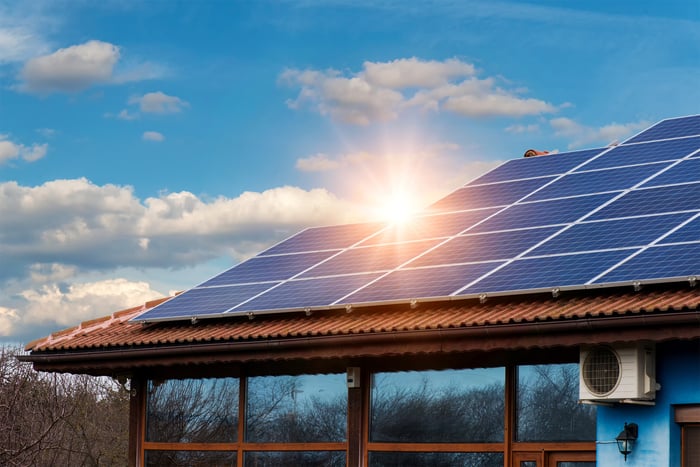
Large roof with solar panels.

Image source: Getty Images.

How SolarEdge got here

The first thing I think we should look at is how SolarEdge became so big and profitable. 

SEDG Market Cap Chart

SEDG Market Cap data by YCharts

The first thing SolarEdge did was build an industry leader in power optimizers, a product that goes on a solar panel and makes the direct current output more efficient before the current goes to the inverter and is converted to alternating current. 

10 years ago, power optimizers were included in a relatively small percentage of solar installations, but they quickly became a standard, helped by adoption at SolarCity (now part of Tesla). What's important about the position of the power optimizer is that it can read how much output is coming from a solar panel, providing important data on the system. It can also shut down a solar panel, which was a required safety feature for residential solar panels in 2019 in some states. 

As its power optimizer business grew, SolarEdge moved into solar inverters and eventually a battery/inverter combo that it's now selling. Inverters and batteries act as the brains of the solar installation, reading and controlling where the electricity goes. They're also the data hub, so SolarEdge provides monitoring solutions to installers. 

The theme here is that SolarEdge is building the products that provide data and control to residential solar installers around the world. And if the solar panel and installation process become commoditized, which they have been over the last decade, SolarEdge will capture most of the value in solar installations. That's why the company is so profitable while most solar companies are struggling. 

Where does SolarEdge go from here? 

SolarEdge is currently dominating the valuable power optimizer to inverter segment of the solar hardware market, but its future will likely be driven by energy storage. Not only will energy storage be an extension of these two components, but they also have the potential to add a lot more value for homeowners and solar companies

Stored energy is now being bid into energy markets through what's known as virtual power plants. Residential solar developpers such as SunPower, Sunrun, and Tesla are aggregating their energy storage installations into, effectively, power plants that can supply energy when needed. So, through control systems, they can charge an in-home energy storage system when electricity is inexpensive and discharge into the grid when electricity is expensive, adding value to all parties and creating a new source of cash flow long-term. 

SolarEdge's challenge in the energy storage market is that it doesn't control the installation infrastructure. In the past, companies like Sunrun or SolarCity had no problem using SolarEdge components, but today they want to control the energy storage hardware themselves, which may limit SolarEdge's growth potential in energy storage. But the company has succeeded in difficult positions in the past, so I wouldn't count it out.